
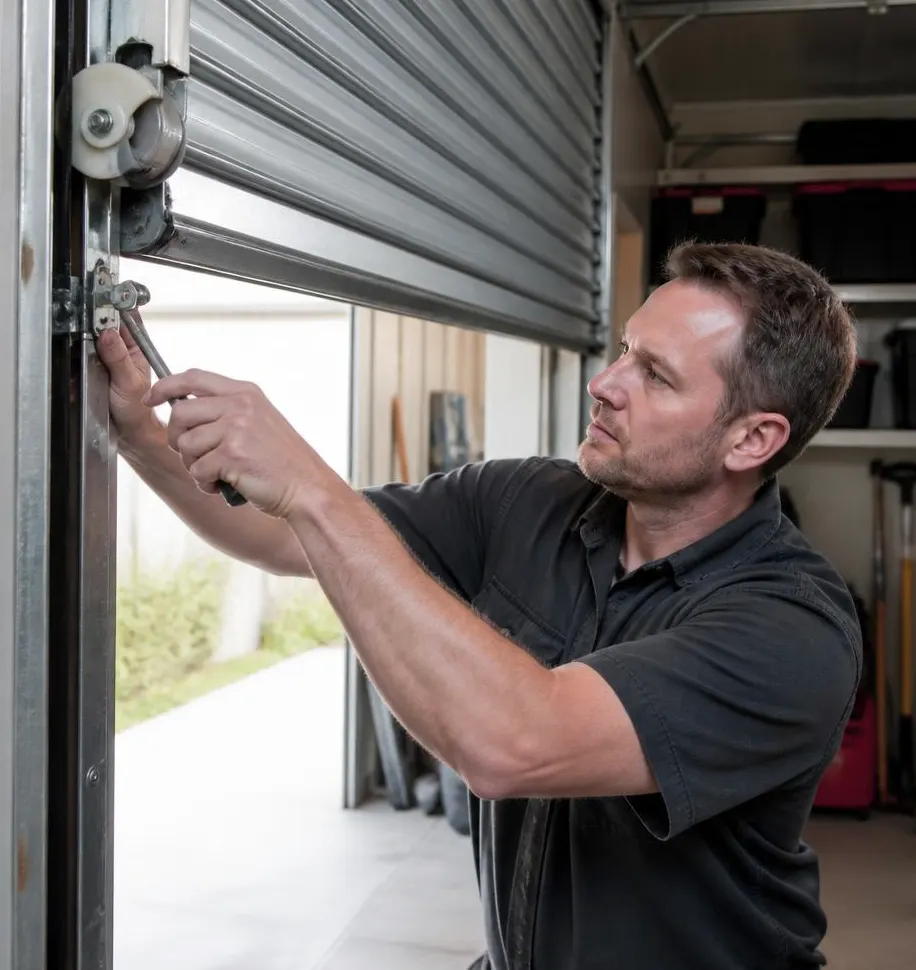
You See Daylight Where There Shouldn't Be Any
It usually happens on an ordinary afternoon. You walk into the garage to grab a tool and notice a thin strip of sunlight glowing under the closed door. Or maybe you've found a trail of fine sand and grit along the floor after a windy week, a lizard sunning itself just inside the threshold, or a damp line on the concrete after one of those sudden afternoon downpours. All of these point to the same culprit: a worn-out bottom seal or cracked weatherstripping.
It's one of the cheapest parts on the entire door, and one of the most ignored. In this part of Florida, where humidity swells wood and rubber, salt air corrodes metal edges near the coast, and hurricane-season storms drive rain sideways under doors, a tired seal does a lot of damage for something that costs so little to replace.
Why This Small Part Matters So Much Here
The bottom seal and side/top weatherstripping are the only things standing between your garage and the outside world. When they fail, you get more than a draft:
- Water intrusion during heavy rain or storm surges of wind-driven water, which can soak stored items, warp wood shelving, and feed mold growth in a humid climate.
- Pests — ants, roaches, lizards, and rodents all use a gapped seal as a front door.
- Dust and pollen settling on cars, tools, and HVAC equipment if your garage connects to conditioned space.
- Energy loss, since a gapped door lets hot, humid outside air mix with any cooled air inside.
None of this requires a major repair. It requires a $20–$60 part (national range, check your door's track style) and about an hour of your Saturday.
Tools You'll Need
- Tape measure
- Utility knife
- Flathead screwdriver or small pry bar
- Replacement bottom seal matching your track type (bulb-style, T-end, or beaded)
- Scissors or a hacksaw for trimming the seal
- Broom and shop rags
- Soapy water or silicone lubricant (makes feeding the seal into the track easier)
- Work gloves
- Staple gun, if you're also replacing flat vinyl weatherstripping along the frame
Step-by-Step: Replacing the Bottom Seal
- Identify your seal type. Open the garage door and look at the bottom edge. You'll see either a bulb-shaped rubber gasket that slides into a retainer track, or a flat T-style seal. Note which one you have before buying a replacement — they aren't interchangeable.
- Measure the width of your door at the bottom panel, not just the opening, since doors are often an inch or two wider than the rough opening.
- Buy the matching seal at a hardware or garage door supply store, in the correct width and track profile.
- Clear the track. With the door closed, use a flathead screwdriver to pry the old seal free from its aluminum or vinyl retainer. Expect it to come out brittle, cracked, or flattened — a telltale sign it's been baking and swelling with Florida's heat and humidity cycles for a while.
- Clean the channel. Sweep out dirt, dead bugs, and old rubber fragments. Wipe the track dry.
- Feed in the new seal. Starting at one end, work the bulb or T-edge into the track. A little soapy water on the edge helps it slide without tearing. Work slowly across the full width.
- Trim the excess with a utility knife or scissors, leaving it flush with both ends of the door.
- Close the door and check the fit. It should compress evenly against the concrete with no visible gaps. Run a flashlight along the inside of the closed door at night — any light leaking through means the seal isn't seated correctly or the track is bent.
- Check the side and top weatherstripping while you're at it. If it's cracked, flattened, or pulling away from the frame, replace that flat vinyl strip too — it's a simple job with a staple gun or adhesive-backed strip.
- Test under real conditions. After the next rain, glance at the garage floor near the threshold. A dry, dust-free line along the door means the fix worked.
What's DIY and What Needs a Technician
Replacing a bottom seal or side weatherstripping is a reasonable weekend project for most homeowners — the parts are cheap, the tools are basic, and mistakes are easy to undo. But a few situations are signs of a bigger problem underneath the seal:
- The door won't seat evenly even with a brand-new seal — this usually means the track is bent or the door is off its rollers.
- You notice the door sagging on one side, which often points to a spring or cable issue rather than the seal itself.
- The bottom panel itself is cracked, rusted, or warped from trapped moisture — a new seal won't fix a damaged panel.
- The opener is closing the door unevenly, leaving one side gapped no matter how many times you adjust the seal.
These point to mechanical issues that go beyond weatherstripping, and forcing a seal to compensate for a misaligned door usually just wears out the new seal faster.
When to Call DeFuniak Springs Garage Door Repair
If you've replaced the seal and still see daylight, feel a draft, or notice the door isn't closing flush against the floor, it's worth having a technician take a look. We handle Off Track Door Repair for doors that won't seat evenly due to bent tracks or rollers, and our Garage Door Maintenance & Tune-Up service checks springs, cables, and alignment so your new seal actually gets to do its job. We serve homeowners and businesses throughout Walton County, from DeFuniak Springs out to Freeport, Crestview, Niceville, and the surrounding area.
If your garage door is letting in water, bugs, or dust no matter what you try, give DeFuniak Springs Garage Door Repair a call. We'll get it sealed up right before the next round of Gulf Coast rain rolls through.