
The Short Answer
If your garage door hasn't been inspected for wind resistance, braced properly, or checked for rust and worn hardware since last hurricane season, it's not ready. A garage door that blows in during a storm doesn't just cost you a door — it lets wind pressure into the whole structure, which is how roofs get torn off. With storm season still active through November here in Walton County, now is the time to check it, not after the next tropical system shows up in the forecast.
Why the Garage Door Is the Weakest Wall in Your House
Most exterior walls are solid, braced, and tied into the frame of the house. A garage door is a large moving panel held in place by tracks, rollers, hinges, and a few mounting brackets screwed into the framing. It's the biggest opening in most homes, and it's built to move, not to resist pressure.
When high wind hits a closed house, pressure builds up outside and tries to find a way in. If the garage door fails — buckles inward, pops off its tracks, or blows apart at the panels — that pressure rushes into the garage and pushes up against the roof from underneath. That's a major reason homes lose roofs in storms even when the walls themselves hold. A door that's rated for wind load and properly reinforced keeps that pressure outside where it belongs.
What Makes a Door Vulnerable
- Old or mismatched hardware — tracks and brackets installed decades ago may not meet current wind-load expectations for coastal and near-coastal Florida.
- Rust at the hinges and track bolts — humidity and salt air work into exposed metal fasteners, weakening the exact points that need to hold under pressure.
- Swollen or warped panels — wood and composite doors absorb moisture during our wet season and can fit loosely in the track, giving wind more room to catch an edge.
- Worn rollers and cables — a door that's already struggling to run smoothly on a calm day will not hold up to repeated wind gusts pushing and pulling on it.
Checks to Make Before Storm Season Peaks
1. Inspect the Track and Brackets
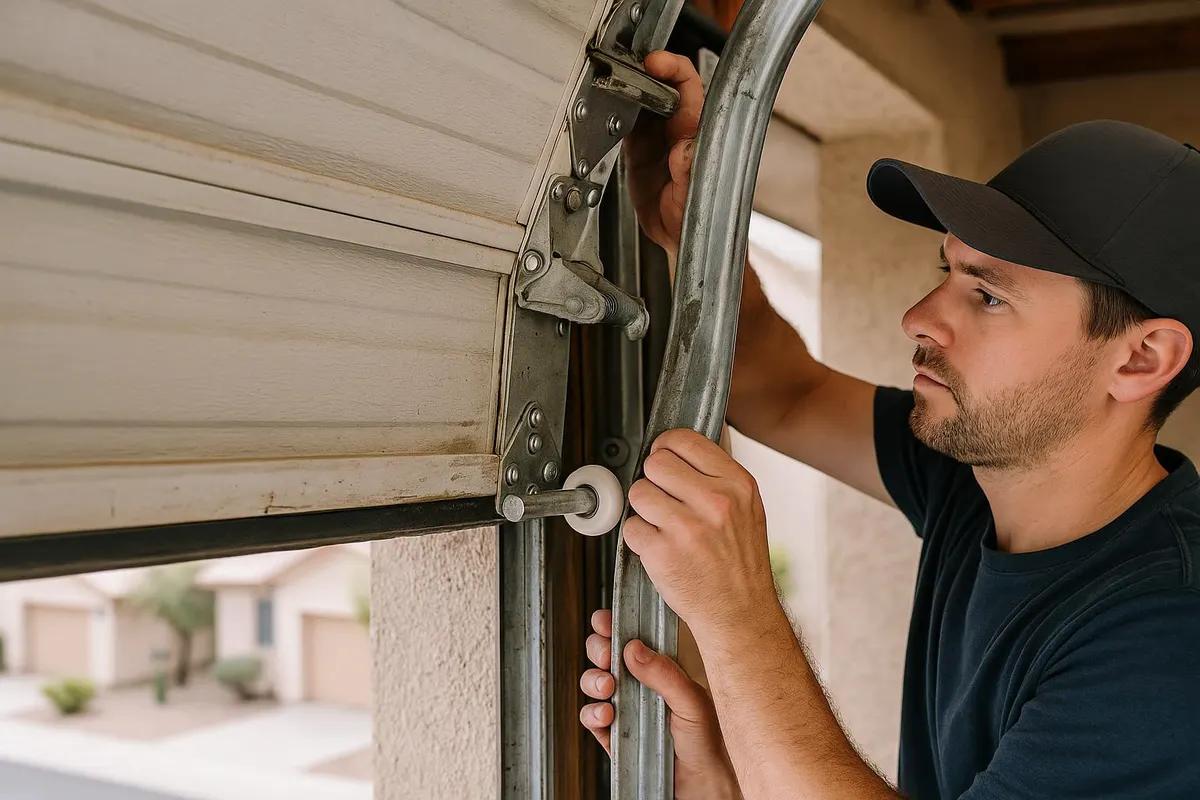
Walk the full length of both tracks. Look for bent sections, loose lag bolts, or brackets pulling away from the framing. A track that flexes under hand pressure will flex a lot more under wind pressure.
2. Check for Rust and Corrosion
Salt air drifting inland from the coast, combined with our humidity, speeds up corrosion on hinges, roller stems, and the bottom bracket where the cable attaches. Rust weakens metal from the inside before it's visible on the surface. If you see surface rust already, assume there's more underneath.
3. Test the Springs and Cables
Springs under tension and cables under load are doing the real work of holding a closed door in place. A fraying cable or a spring that's lost tension puts more strain on the rest of the hardware during wind gusts. This isn't a DIY inspection you want to push too far — springs are under enough tension to cause serious injury if they let go.
4. Look at the Panels Themselves
Run a hand along the seams between panels. Gaps, warping, or sections that don't sit flush are a sign the door isn't sealing the way it should, which matters both for wind resistance and for keeping wind-driven rain out during afternoon downpours.
5. Confirm the Opener Has a Manual Release
If power goes out mid-storm, you need to be able to operate the door manually, or at minimum secure it in the closed position without relying on the opener. Know where the release cord is and make sure it works before you need it in the dark.
Reinforcing a Door for Wind
If your current door predates the stricter wind-load expectations common along the Gulf Coast, a few approaches are worth weighing:
- Horizontal bracing kits — retrofit braces that stiffen the panels against inward and outward flex. Lower cost, but only as good as the track and hardware they're attached to.
- Upgraded tracks and reinforced brackets — a step up in cost but addresses the weakest point directly, especially on older installations.
- Replacing with a wind-rated door — the most durable long-term option, built specifically to handle sustained wind pressure, at a higher upfront cost (typically a few hundred to over a thousand dollars more than a standard door, depending on size and materials).
None of these fixes matter if the door is already loose, rusted, or off its rollers. Reinforcement works with good hardware, not instead of it.
When to Call DeFuniak Springs Garage Door Repair
If you've spotted rust on the hinges, a track that flexes, a spring that looks stretched or uneven, or panels that don't sit flush, don't wait for a storm warning to deal with it. Our team handles garage door maintenance & tune-ups to catch exactly these issues before they become storm-season emergencies, and we handle garage door cable repair and spring replacement when the load-bearing hardware is already past the point of a quick fix. We show up, diagnose what's actually failing, and fix it right the first time — whether that's a full inspection now or an emergency call after a bad blow-through.
If you're searching for a garage door company near US-90 in DeFuniak Springs, or you need a garage door technician anywhere from Freeport to Crestview to Santa Rosa Beach, give DeFuniak Springs Garage Door Repair a call today and get your door storm-ready before the next system forms in the Gulf.