
What a Technician Usually Finds This Time of Year
Once the humidity breaks and mornings turn cool, service calls around Walton County start sounding the same: a door that worked fine all summer suddenly grinds going up, hesitates halfway, or reverses for no clear reason. Nine times out of ten, the problem didn't just appear. It was building all through hurricane season — rust creeping onto a spring coil, grit packed into a track, a sensor knocked a few degrees out of alignment by a storm — and the first cold snap is just what makes it obvious. Winter here isn't brutal, but the swing from muggy summer air to dry, cooler nights is exactly the kind of change that exposes weak spots in a garage door system.
Check for Storm-Season Damage You May Have Missed
Afternoon downpours and tropical weather leave marks that aren't always visible until you look closely. Walk your door's full track length and hardware with a flashlight and check for:
- Rust spots on the torsion spring, especially near the ends where moisture collects
- Bent or dented track sections from wind-driven debris
- Loose mounting brackets where screws may have backed out from vibration
- Water staining on the bottom panel, which can mean the door sat in standing water during heavy rain
Panels that took on moisture can swell or warp slightly, which shows up as a door that binds in the track even though everything looks straight. If you spot swelling, panel replacement is usually more cost-effective than trying to force a warped section back into shape.
Lubricate for Temperature Swings, Not Just Noise
Summer humidity leaves a layer of grime on rollers, hinges, and the spring itself, and whatever lubricant was applied months ago has likely thinned out or washed away in the rain. As temperatures drop into the 40s and 50s overnight, residual oil and grease thicken, which is why doors that moved smoothly in August can feel sluggish or noisy in December. Clean off old grime first, then apply a silicone-based garage door lubricant to the springs, hinges, rollers, and the track where the rollers ride. Avoid WD-40 as a long-term fix — it's a solvent, not a lubricant, and it evaporates quickly, leaving metal parts drier than before.
Weatherstripping and Seals
The rubber seal along the bottom of the door and the weatherstripping around the frame take a beating from UV exposure and constant wet-dry cycling during hurricane season. By fall, it's common to see cracking, flattening, or sections that have pulled away from the panel. A compromised seal lets in cold morning drafts, pests looking for a warm spot, and water during wind-driven rain. Replacing bottom seal and side weatherstripping is a simple, low-cost job that makes a noticeable difference in keeping the garage dry and draft-free through the cooler months.
Don't Overlook the Opener
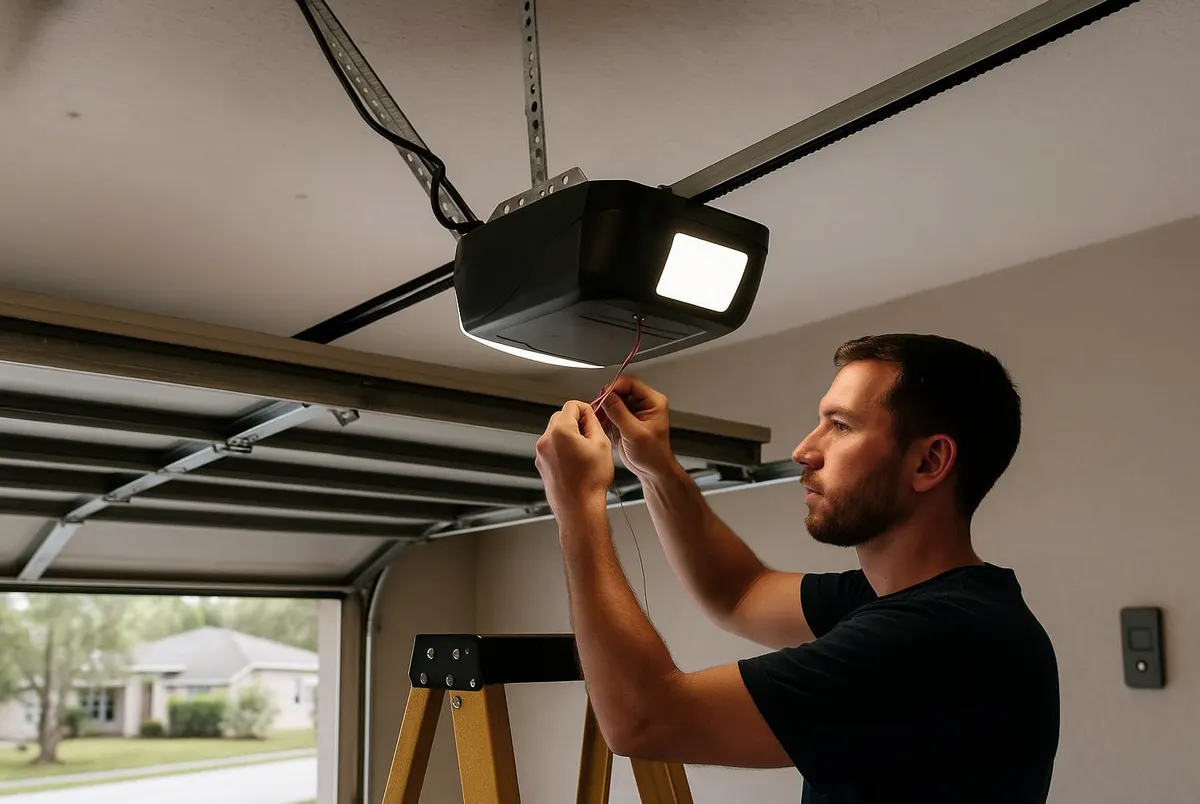
Garage door openers take hidden damage from humidity and summer storms, and problems often surface once cooler, drier air sets in and components contract slightly. A few things worth checking:
- Safety sensors (the small eyes near the bottom of the track) — clean the lenses and confirm they're still aligned; a knocked sensor is a common cause of a door that won't close
- Battery backup, if your opener has one — winter storms still roll through the panhandle, and a dead backup battery means a stuck door during a power outage
- Remote and keypad batteries, which drain faster after months of humidity exposure
- Chain or belt tension — a loose chain tends to slap loudly once temperatures drop and metal contracts slightly
Spring Tension Matters More in Cooler Weather
Torsion springs that were already fatigued from months of heat and humidity are more likely to show their age once temperatures cool. Cold, dry metal is slightly less forgiving than warm metal, so a spring that's been quietly wearing down all year is more likely to finally give out in the fall or winter. Warning signs include a door that feels heavier than usual when lifted manually, visible gaps in the spring coil, or a loud bang from the garage (often the spring snapping). Springs are under serious tension and aren't a DIY repair — this is one job where calling a technician is the only safe option.
When to Call DeFuniak Springs Garage Door Repair
If your door is grinding, hesitating, reversing on its own, or you've spotted rust, a cracked seal, or a warped panel during your walkaround, it's worth having it looked at before the issue gets worse. We handle garage door spring repair for doors that feel heavy or make that telltale bang, and we do full garage door maintenance and tune-ups that cover lubrication, hardware tightening, track alignment, and sensor checks in one visit — exactly the kind of once-a-year service that catches storm-season wear before it turns into an opener that won't work on a cold morning. We also handle off-track repair, cable repair, panel replacement, and opener installation for homes and businesses across DeFuniak Springs, Freeport, Crestview, Niceville, Valparaiso, Santa Rosa Beach, Bonifay, and Ponce de Leon.
If you're searching for a garage door company near US-90 in DeFuniak Springs, or just want a local garage door technician to look things over before winter settles in, give us a call. We'll get your door running right before the season changes any further.